
What are Civilian Telescopes?
What is "civilian telescopes." Simply put, civilian telescopes are optical instruments designed and manufactured to meet the observation needs of ordinary people in non-military, non-extreme environments. Their core principle is to achieve the best balance of performance, cost, portability, and user experience.
This is in stark contrast to the "task-oriented tool" nature of military telescopes; civilian telescopes are "precision optical equipment serving enthusiasts."
I. Core Positioning of Civilian Telescopes: Serving Interests and Needs
The core goal of civilian telescopes is to help people better observe and appreciate the world. Their design revolves around specific application scenarios and user comfort.
II. Main Categories and Uses of Civilian Telescopes
Civilian telescopes are a vast family, mainly divided into the following categories:
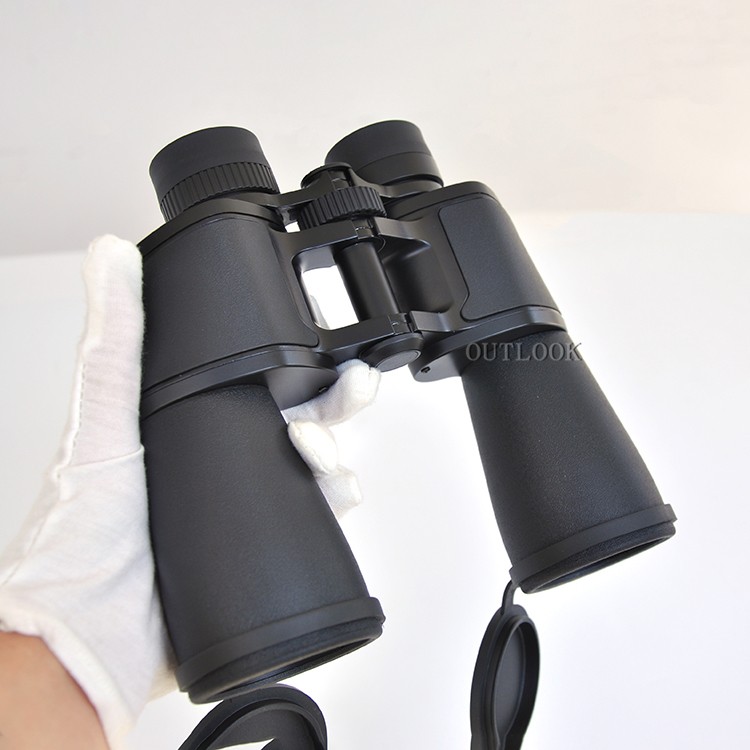
Binoculars are the most widely used, suitable for most scenarios.
Birdwatching: This is the main driving force behind the technological development of high-end civilian binoculars. Birdwatching binoculars require sharp imaging, a wide field of view, fast and precise focusing, and comfortable handling.
Sightseeing/Travel: Sightseeing/Travel binoculars emphasizes portability, lightweight design, and high magnification (such as 8-25x zoom), making them easy to carry.
Watching sports/performances: Watching sports/performances binoculars require a compact, discreet design, usually with moderate magnification (such as 8x32), and clear central focus.
Hunting/Outdoor: Hunting/Outdoor binoculars Emphasize robustness, waterproofing, and fog resistance. Some models have laser rangefinding capabilities and simple reticles.
Monoculars
High-magnification observation: Often used for birdwatching (detailed observation), wildlife observation, and astronomical observation (viewing the moon, star clusters).
Requires a tripod for stability.
Astronomical Telescopes
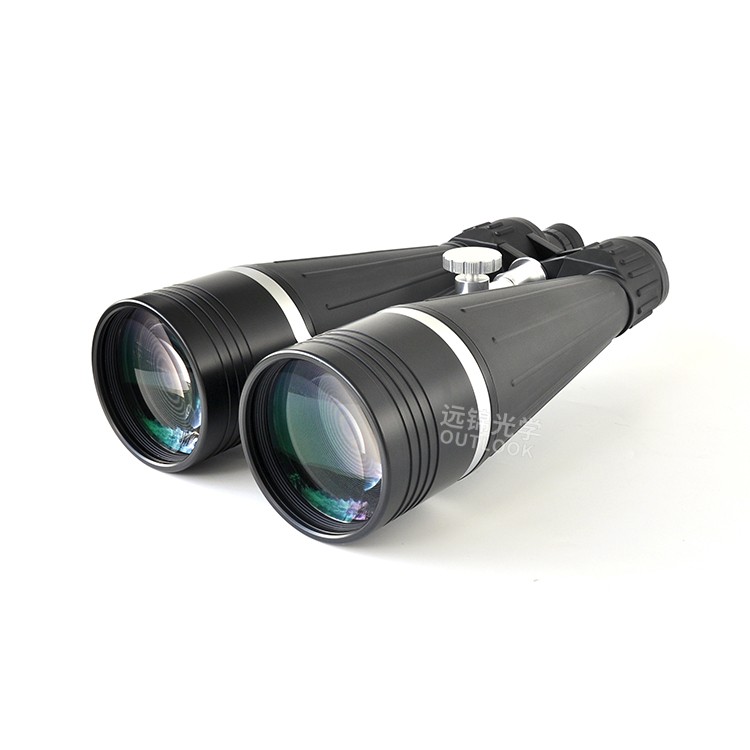
Professionally used for observing deep-space objects, planets, etc. They have large apertures, high magnification, and complex structures, representing another specialized field.
Rangefinding Telescopes
Integrate a laser rangefinding module, mainly used in scenarios requiring precise distance data, such as golf, hunting, and engineering surveying.
Children's/Entry-Level Telescopes
Low cost, simple structure, used to cultivate interest.
III. Typical Characteristics of Civilian Telescopes (Compared to Military Telescopes)
Design Philosophy: User experience is paramount
Lightweight design: Extensive use of engineering plastics, magnesium alloys, and other materials to reduce weight while maintaining strength. Ergonomics: The binocular body is shaped to fit the hand comfortably, the focus wheel is smooth to the touch, and the eyecups are either twist-up or foldable, suitable for glasses wearers.
Fast Focusing: Many birdwatching binoculars use a central fast-focusing wheel, enabling rapid focusing from near to far, which is crucial for tracking flying birds.
Optical Pursuit: Excellence and Special Features
Top-tier Optical Quality: In the high-end market (such as Swarovski, Zeiss, Leica, KOWA, etc.), the optical performance of civilian binoculars is the primary pursuit. They use ultra-low dispersion lenses and advanced coatings, aiming for the highest resolution, the most realistic color reproduction, the widest flat field of view, and minimal edge distortion. In this field, top-tier civilian binoculars often surpass the optical performance of ordinary military binoculars at the same price point or even more expensive ones.
Special Features: Such as waterproof and fogproof (almost all mid-to-high-end models have this), zoom, image stabilization (compensating for hand shake through optical or electronic technology), and smartphone photography adapters.
Durability and Standards: Good enough is sufficient.
Mid-to-high-end civilian binoculars also have excellent waterproof, fogproof, and shockproof performance, and have passed civilian protection standards such as IPX7.
However, unlike the "destructive testing" of military standards, civilian standards are designed to cope with general outdoor environments (rain, humidity, normal drops). Their design does not consider long-term survival in extreme battlefield environments such as sandstorms, salt spray, and extreme cold, nor are they designed to withstand explosion shock waves.
Appearance and Market of Civilian Telescopes
Stylish Appearance: Available in various colors such as black, green, camouflage, and sand, with a streamlined and modern design.
Wide Price Range: From inexpensive toys costing tens of yuan, to mainstream products costing thousands of yuan, to top-of-the-line flagship models costing tens of thousands of yuan, there is a wide range of choices.
IV. Important Concepts: How to Choose a Good Civilian Binocular?
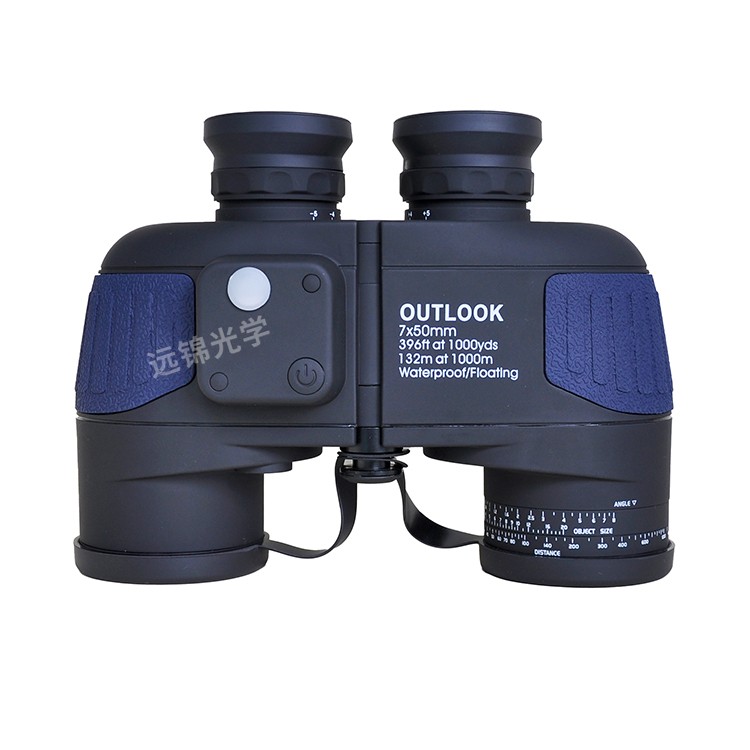
Parameter Interpretation: Such as 8x42
"8x" is the magnification. 8x means that objects at 80 meters appear as if they are 10 meters away. 7-10x is the most commonly used magnification, providing the most stable handheld viewing.
"42" is the objective lens diameter (in millimeters). The larger the number, the more light enters, resulting in brighter viewing at night or in dim light, but the binoculars will also be heavier.
Exit Pupil Diameter = Objective Lens Diameter ÷ Magnification. For example, 42÷8 = 5.25mm. This number is greater than 4mm, indicating better comfort.
Field of View: Usually expressed as "the width of the field of view visible at 1000 meters (meters)". The larger the number, the wider the viewing range.
Prism Type:
Porro Prism: Traditional structure, with a winding optical path. The body is usually wider, but it's easier to achieve high brightness. Robust, commonly found in low-to-mid-range and some military binoculars.
Roof Prism: Modern mainstream design, with a compact and straight body. Requires phase correction coating to achieve excellent image quality. High-end binoculars almost exclusively use roof prisms.
Coating:
Multi-layer full-surface coating is the best. The weaker the reflection of the lens (appearing dark green or purplish-red), the higher the light transmission rate usually is.
V. Summary and Common Misconceptions of Civilian Telescopes
Core difference: Military binoculars are "precision tools designed for war," while civilian binoculars are "precision optical products designed for hobbies."
Misconception of Civilian Binoculars:
"Civilian binoculars are not durable":
Wrong.
Mid-to-high-end civilian binoculars (especially outdoor and hunting series) are very robust and durable, sufficient to handle 99% of outdoor challenges, including mountaineering, sailing, and rainforest exploration. They simply don't incur the extra cost for "battlefield survival."
Advice for ordinary people: Unless you need binoculars for use in combat or polar expeditions, a high-quality civilian binocular (chosen according to your budget and purpose) is a far wiser, more comfortable, and often optically superior choice than "military binoculars." For birdwatching, watching performances, traveling, stargazing, etc., civilian binoculars are absolutely the mainstream and best choice.
Ultimately, civilian binoculars are a bridge connecting us to the distant world. Civilian binoculars reveal details, bring beauty closer, and are powerful partners in exploring and appreciating nature and culture.
civilian binoculars Civilian Telescopes
