
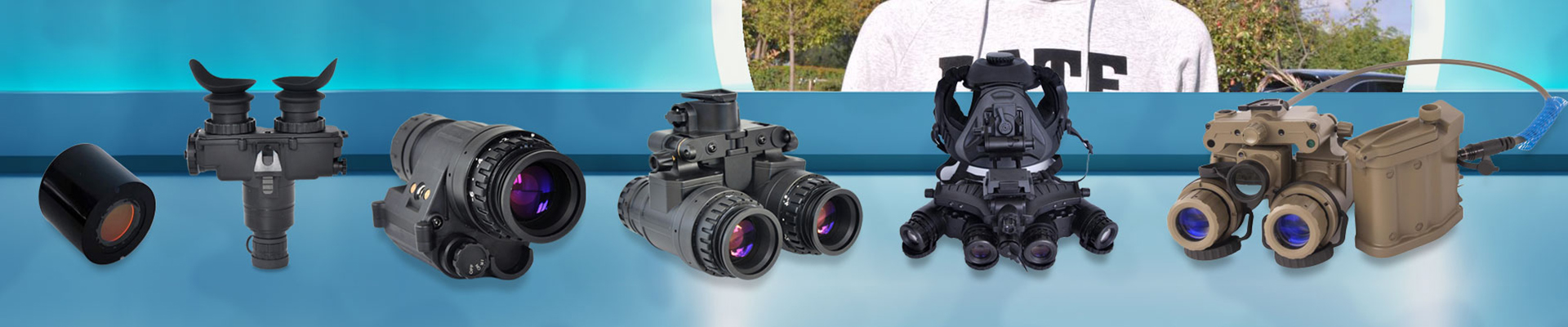
The Development History of the PVS-14 Series Low-Light Night Vision Devices
The PVS-14 series is the most famous and widely used single-tube monocular low-light night vision device in the United States and globally. Its development history is a story of transformation from specialized military equipment to a versatile core module for multiple fields.
1. Background and Development Goals
Filling a Market Gap: In the 1990s, the US military possessed both the bulky PVS-7 binocular night vision device and the expensive AN/AVS-6 night vision device specifically for pilots. There was a pressing need for a lightweight, robust, and multi-functional individual night vision device that could be used independently or as a module to upgrade existing systems.
Project Initiation: Led by the US Army's Night Vision and Electronic Sensors Directorate, ITT (now L3Harris) was the main contractor. Testing was completed around 1995, and large-scale deployment began around 2000.
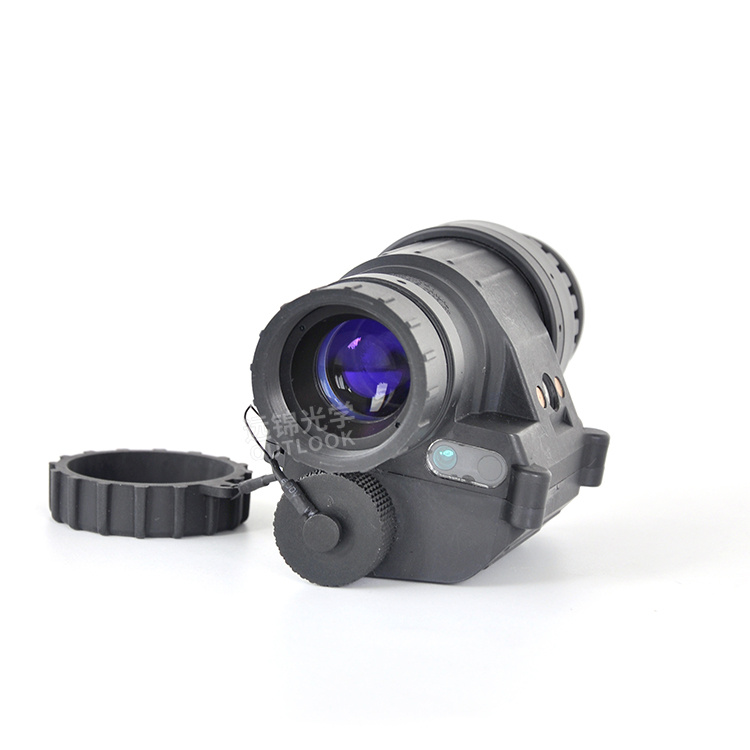
2. Technological Evolution and Model Iterations
The PVS-14 is not a static model, but a continuously improving series.
First Generation (Early Models)
Image Intensifier Tube: Standard Gen 3 tube, using the MX-10160 type, with gallium arsenide photocathode material, and a standard resolution of 64 lp/mm.
Features: Metal casing, relatively heavy weight (approximately 400 grams), and basic functionality.
Second Generation (Mainstream Model - PVS-14 Standard)
Core Upgrades: Widespread use of autogated and filmless Gen 3 image intensifier tubes (such as MX-10160/UV, OMNI-V to VIII contract tubes).
Autogating: Millisecond-level voltage control, greatly improving protection and imaging stability under strong light conditions (such as sudden lights or explosions).
Filmless Technology: Removal of the ion barrier film, improving photon detection efficiency, and increasing the signal-to-noise ratio (SNR) from the early 21+ to 30+, resulting in better performance under extremely low light conditions.
Structural Optimization: The casing uses high-strength polymer, reducing the weight to approximately 380 grams, making it more ergonomic.
Improved Functionality:
Adjustable diopter (±5) and objective lens focus. Infrared indicator light (visible status).
Waterproof (typically 20 meters).
Standard J-arm and helmet mount included for quick switching between helmet and handheld use.
Third Generation (Special and Improved Models)
PVS-14A: Optimized model for the US Army, typically referring to equipment meeting specific military contract standards (such as OMNI contracts).
PVS-14B/M: Multi-weapon platform interface version, with improved Picatinny rail interface for more secure mounting on various weapons.
PVS-14C: Model developed for the US Navy, reportedly with enhanced corrosion resistance and compatibility.
PVS-14 night vision devices using "white phosphor" tubes (WP):
Traditional night vision images are green, but white phosphor tubes (such as MX-11769/UV) provide black and white images.
Advantages: Users report higher contrast, less eye fatigue during prolonged observation, and easier discernment of terrain details.
Since the mid-2010s, it has gradually become the preferred choice for high-end users (special forces, experienced enthusiasts).
Fourth Generation (Technological Integration and Civilianization)
Civilian/Commercial Models: Manufacturers have introduced versions for law enforcement, security, and outdoor enthusiasts, possibly using "Gen 3+" tubes (performance close to military specifications, but with slight differences in lifespan or specifications).
Digital Fusion Attempts: Some manufacturers are experimenting with "digital night vision" cores on the PVS-14 architecture, or adding digital video output interfaces, but analog image intensifiers remain mainstream due to their advantages of no latency and high dynamic range.
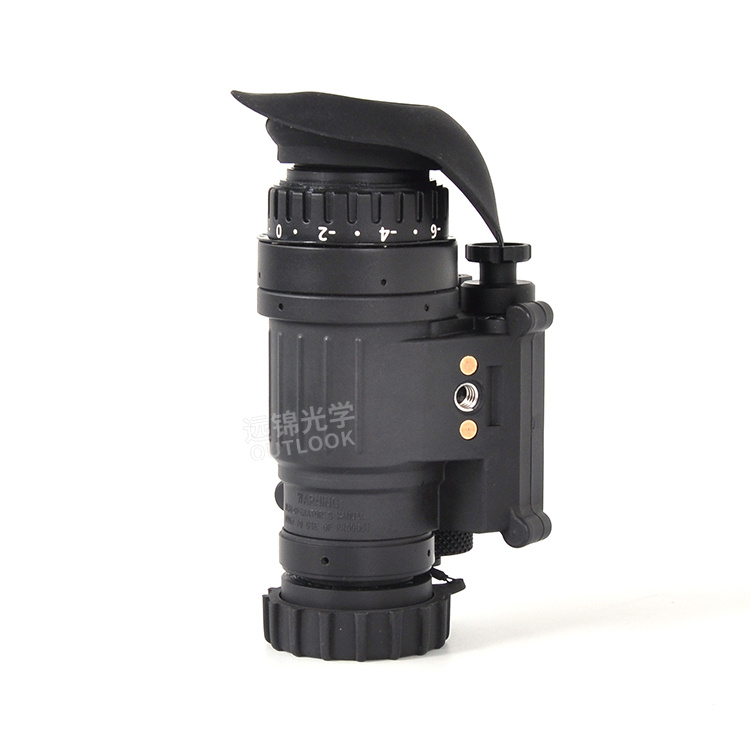
3. Core Features and Modular Design
"Swiss Army Knife" flexibility:
Handheld observation: As a monocular telescope.
Helmet-mounted: As a monocular night vision device, preserving dark adaptation in one eye.
Weapon sight: Mounted on rifles and carbines via a dedicated mount (such as the Norotos Universal Dovetail) as a night vision scope.
Binocular system: Two PVS-14 night vision devices are connected via a binocular bridge (such as BNVD) to form a powerful binocular panoramic night vision device, at a lower cost than dedicated binocular systems.
4. Applications and Impact
Military Revolution: It became the standard issue for individual soldiers in the 21st-century US military and its allies, widely used from special forces (SEALs, Delta Force) to regular infantry. It defined the modern night combat observation method of "single-eye use, both eyes open."
Law Enforcement and Security: Standard equipment for SWAT teams and border patrol units worldwide.
Civilian Legend: After declassification, it gained a large following among users in fields such as astronomical observation, wildlife observation, cave exploration, and nighttime work.
5. Current Status and Future
Still in Service and Production: Despite newer devices (such as the lighter PVS-31 binocular night vision device, or the GPNVG-18 quad-eye night vision device with thermal imaging), the PVS-14 night vision device is still widely produced and equipped globally due to its unparalleled cost-effectiveness, reliability, and modular advantages.
Continuous Technological Advancements: New image intensifier tube technologies (such as tubes with higher SNR) and more durable housing materials are continuously being applied to newly manufactured PVS-14 night vision devices.
Historical Significance: Considered one of the most revolutionary products in the history of night vision equipment, it successfully popularized and modularized high-performance night vision technology, and its design philosophy profoundly influenced the development of all subsequent individual night vision devices.
The history of the PVS-14 night vision device demonstrates the power of excellent industrial design: a single solution, through extreme modularity and reliability, met diverse needs spanning decades and remains a benchmark in the field of night vision to this day.
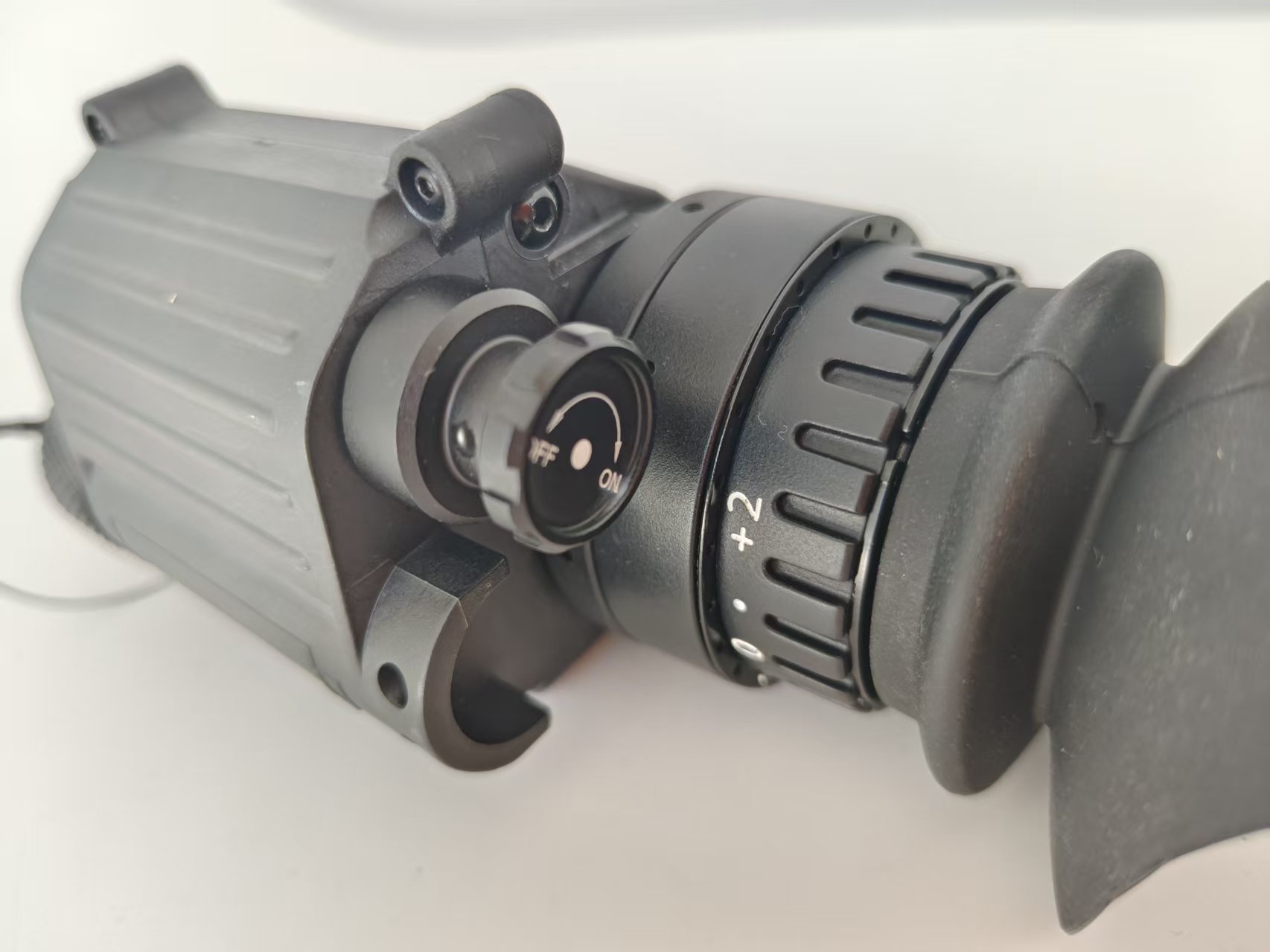
OUTLOOK's "PVS-14" low-light night vision device is directly comparable to and modeled after the American AN/PVS-14 night vision device.
Basic Positioning and Use:
Both are single-eye, single-image intensifier tube military standard low-light night vision devices.
Core functions are identical: amplifying photons under low light conditions (starlight, moonlight) to generate visible images for nighttime observation, patrolling, aiming, and driving.
Usage is highly consistent: it can be handheld, helmet-mounted (using a J-arm and bracket), or mounted on a weapon as a night vision sight via an adapter. Optical Architecture and Design:
The overall appearance, dimensions, and optical layout (objective lens group, image intensifier tube housing, eyepiece group) are highly similar to the American PVS-14, which is an inevitable result dictated by functionality.
Both utilize a modular design, allowing the core image intensifier tube to be replaced or upgraded independently.
Basic Performance Parameters:
The nominal field of view (typically 40°±), magnification (1x, no magnification), and basic gain—key optical parameters—are essentially the same to meet identical tactical requirements.
China has made rapid progress in recent years, especially achieving substantial breakthroughs in domestically produced third-generation image intensifier tube technology, making the leap from "usable" to "high-performance." Its greatest advantages lie in its extremely high cost-effectiveness, complete independent supply chain, and free availability in the domestic market.
OUTLOOK PVS-14 night vision device already possesses most of the core functions, its reliability is constantly improving, and it meets the needs of most users at a more affordable price, achieving localization and large-scale application.
PVS-14 PVS-14 PVS-14 PVS-14 PVS-14 PVS-14 PVS-14 PVS-14 PVS-14 PVS-14 PVS-14 PVS-14 PVS-14 PVS-14 PVS-14 PVS-14
PVS-14 PVS-14 PVS-14 PVS-14 PVS-14 PVS-14 PVS-14 PVS-14 PVS-14 PVS-14 PVS-14 PVS-14 PVS-14 PVS-14 PVS-14 PVS-14
