
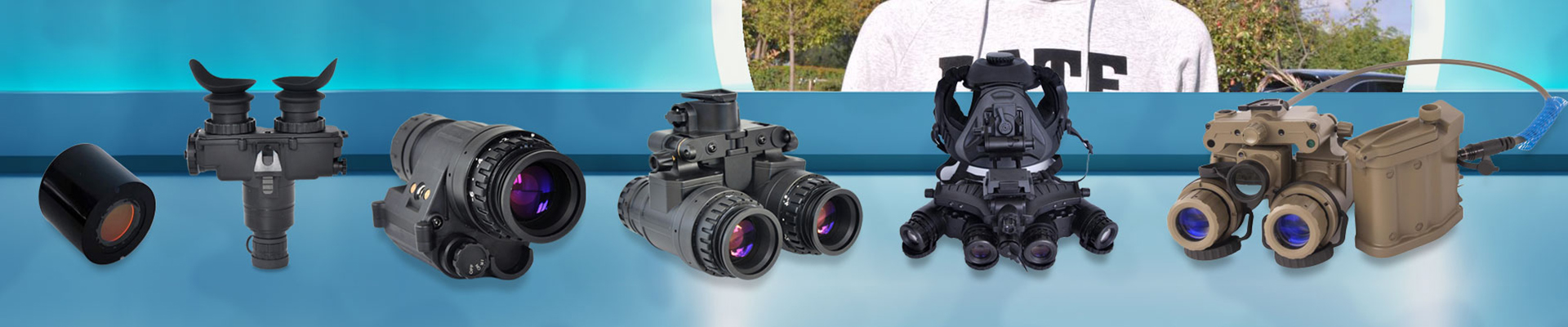
A "blemished image intensifier tube" specifically refers to defects in the image intensifier tube, the "heart" of a night vision device.
An image intensifier tube is a precision vacuum device that converts weak light (such as starlight or moonlight) into a bright, visible image through photoelectric conversion and electron multiplication. The production of image intensifier tube is extremely complex, resulting in a low yield, and therefore products exist with different grades and defects.
What is a blemished image intensifier tube?
As the name suggests, blemished image intensifier tube is a tube with defects in its internal structure or performance, leading to reduced image quality. These defects are usually detected during manufacturing and graded according to standards (such as the US MIL-STD standard).
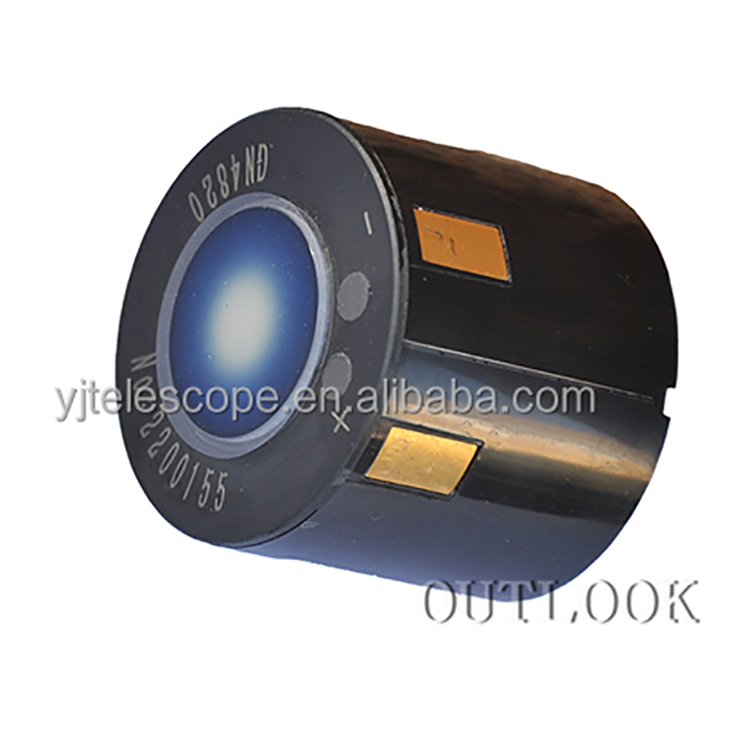
Common types of defects (observable in the image):
1. Fixed black/bright spots
Appearance: Immovable black or white spots that are always present in the image.
Cause: Usually tiny dust particles, fibers, or impurities on the tube wall, cathode, or phosphor screen. Black spots (blemishes) are impurities that block electrons or light; bright spots (highlights) are tiny protrusions that emit electrons themselves.
Impact: The most common defect. A small number of tiny black spots (e.g., diameter < 0.003 inches) are usually acceptable, but too many or too large spots will affect observation.
2. Fibers/hairs
Appearance: Thin, curved black lines appear in the image.
Cause: Tiny fibrous contaminants inside the tube.
Impact: More noticeable than black spots and more likely to interfere with vision.
3. Edge bright spots/halos
Appearance: Bright ring-shaped or arc-shaped halos appearing at the edge of the field of view.
Cause: Abnormal scattering of electrons in the edge region of the tube or collision with the tube wall.
Impact: Affects peripheral vision, especially noticeable against a dark background.
4. Uneven brightness
Appearance: The brightness of the image center and edges is inconsistent, or there are noticeable bright and dark areas.
Cause: Uneven sensitivity of the photocathode, or uneven electron multiplication.
Impact: Affects viewing comfort and detail resolution.
5. Flickering/glowing defects
Appearance: Bright spots that occasionally flicker, move, or change in the image.
Cause: Unstable micro-discharges or free active ions inside the tube. Impact: Dynamic defects are more distracting than fixed-point defects.
6. Insufficient Resolution
Manifestation: The image is blurry, details are unclear, and the nominal line pairs/mm are not achieved.
Cause: Manufacturing process issues, such as poor quality of the microchannel plate or phosphor screen.
Impact: This is a serious performance defect that directly affects the core value of the night vision device – the ability to clearly see the target.
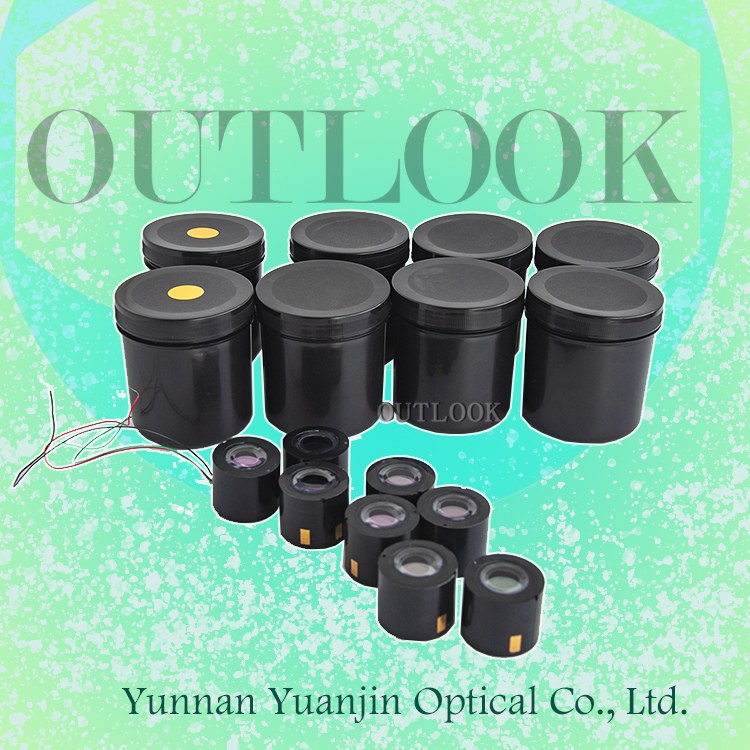
OUTLOOK Blemished Image Intensifier Tube Sources and Market
Factory Seconds: OUTLOOK blemished image intensifier tube screened out by manufacturers during strict quality control because they do not meet the highest military/commercial standards. They may only have 1-2 small black spots or slightly lower brightness. These are not refurbished/remanufactured defective tubes.
Night vision devices assembled using "blemished image intensifier tubes" (image intensifier tubes with flaws) have only one core advantage, but this advantage is crucial for many enthusiasts:
Core Advantage: Extreme Price Advantage
This is the foundation of all other advantages. Night vision devices assembled with blemished image intensifier tubes typically cost only one-third to one-half, or even less, of the price of devices using equivalent but flawless or near-flawless new tubes.
This "price advantage" opens the door to several specific and tangible benefits:
Specific Advantages Explained
Extremely Low Entry Barrier
Making dreams a reality: Night vision devices (especially traditional image intensifier types, excluding digital night vision) have long been expensive professional/military equipment. Defective tube devices provide amateur enthusiasts, outdoor adventurers, and stargazers with an opportunity to "experience the night" at an affordable cost, allowing more people to experience true night vision device technology.
The Perfect "Entry-Level Trial" Tool
Low-cost trial and error: Before deciding whether to invest tens of thousands of yuan in top-of-the-line equipment, buying a defective tube night vision device for a few thousand yuan is the best way to understand your real needs. You can actually experience:
Do you like/need the visual experience of night vision?
Can you adapt to monocular (such as PVS-14) or binocular viewing?
How useful is a night vision device in your actual usage scenarios (e.g., hiking, stargazing, animal observation)?
Even if you find it not frequently used or unsuitable after trying it, the resale loss of a low-priced device is much smaller.
Meeting Practical Needs in Specific Scenarios
For non-critical, non-precision observation tasks, minor image imperfections are perfectly acceptable. For example:
Night hiking and camping: Used to see the path and the outlines of the surrounding environment.
Farm/property inspection: Checking fences, checking livestock.
Used as a tool: For equipment maintenance (non-precision circuits) in extremely dark environments, finding items, etc.
In these scenarios, users need the functionality of "being able to see," not the ultimate image quality of "seeing perfectly."
A "Material Library" for DIY and Modification Enthusiasts
For tech-savvy enthusiasts who like to tinker, the blemished image intensifier tube itself is an inexpensive "heart" component. They can build around it, sourcing or 3D printing the casing, lens mounts, brackets, etc., to assemble a completely customized night vision device, enjoying the hands-on experience while gaining a deep understanding of its structural principles.

Potential for "Performance Premium"
In rare cases, the core performance parameters (such as resolution, signal-to-noise ratio, and brightness gain) of some defective tubes may not be bad, or even close to those of high-grade image intensifier tubes, only having fixed cosmetic defects (such as a few black spots on the edges). This means you might get image brightness and clarity close to that of mid-to-high-end tubes at a very low price, only needing to tolerate some "blemishes" on the screen. This is a highly cost-effective option for users who don't mind fixed spots.
Summary:
A night vision device with a blemished image intensifier tube will inevitably compromise the theoretically perfect image quality, but for many minor defects, this impact can be minimized or even ignored in practical use. It trades visible image imperfections for a significant price advantage. As long as the intended use matches the device's capabilities, expectations are reasonable, and you clearly understand what you are accepting by reviewing the "defect map," a carefully selected night vision device with minor tube defects can be a highly cost-effective and practical tool that allows you to navigate the darkness.
night vision device
